
Why You Owe Taxes This Year as an Entrepreneur (Even If You Didn’t Make That Much)
If you’re an entrepreneur, freelancer, or self-employed professional, you might be asking yourself:
“How do I owe taxes when I barely made anything?”
It feels frustrating especially when money already feels tight.
Here’s the truth most people don’t explain clearly:
You didn’t mess up. You just didn’t have a system.
The tax bill isn’t random. It’s the result of how the self-employment tax system works and how most entrepreneurs are never taught to navigate it.
Let’s break it down so you understand why this happens and, more importantly, what to do moving forward.
1. Self-Employment Tax Isn’t Just “Income Tax”
Most new entrepreneurs assume taxes = income tax.
That’s only part of the picture.
When you’re self-employed, you’re responsible for:
Income tax
Self-employment tax (15.3%)
This covers:
Social Security
Medicare

Why this matters:
If you made $30,000 in profit, you’re not just taxed like an employee, you’re taxed as both:
the employee
and the employer
That alone surprises most business owners and creates unexpected tax bills.
2. No Withholding = No Safety Net
When you worked a W-2 job, taxes were automatically taken out of your paycheck.
As an entrepreneur?
Nothing is withheld.
That means:
Every dollar you receive is pre-tax
The IRS still expects their portion
You’re responsible for setting it aside
Common mistake:
Spending income as if it’s fully yours
Reality:
A portion of every payment you receive belongs to the IRS.
Without a system, it feels like you’re making money until tax season hits.
3. Profit vs. Cash: The Biggest Confusion

One of the most overlooked issues:
You’re taxed on profit, not what’s in your bank account.
Example:
You made $50,000. You spent $35,000 on business expenses
Your taxable profit = $15,000
But here’s where it gets tricky:
If you didn’t track expenses properly → your profit looks higher
If you mixed personal & business finances → you likely missed deductions
If you reinvested money → you might feel broke but still owe taxes
Key insight:
Cash flow and taxable income are not the same thing.
4. Missing Quarterly Payments Adds Up Fast
The IRS expects entrepreneurs to pay taxes throughout the year, not just in April.
These are called: Estimated quarterly payments
If you didn’t:
You may owe a full year of taxes at once
You could face penalties
The bill feels significantly larger than expected
Why most people miss this:
No one told them
They assumed taxes happen once a year
They didn’t have a planning system
5. The Real Problem: No Financial System
Most entrepreneurs think the issue is:
“I didn’t make enough money.”
But the real issue is:
There was no system for managing taxes, tracking finances, and planning ahead.
Without a system:
You don’t know your real profit
You don’t set aside taxes consistently
You miss deductions
You fall behind on payments
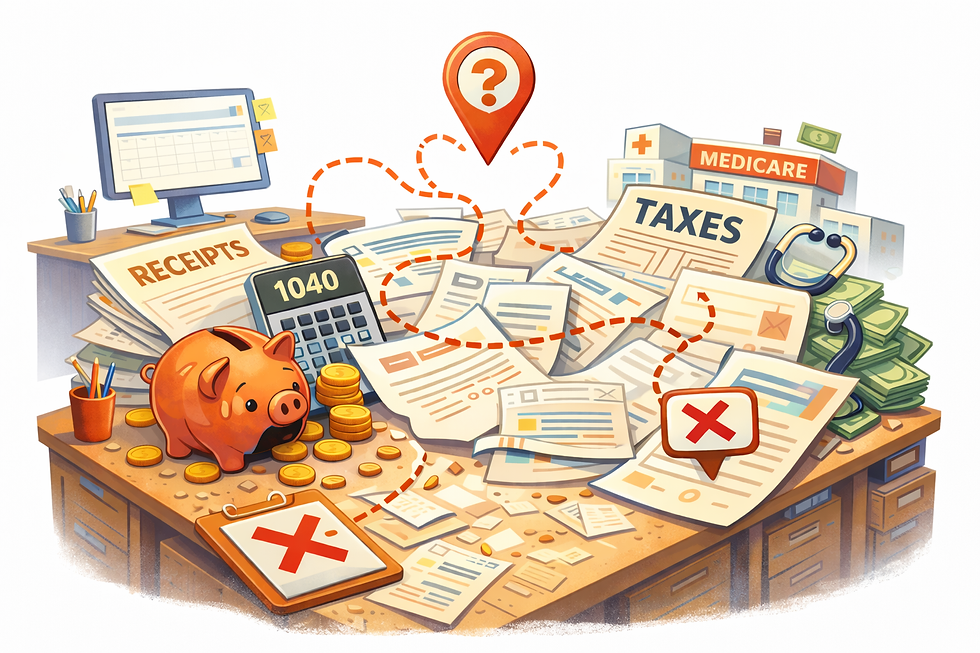
And the result?
Surprise tax bills that feel unfair but are actually predictable
What You Should Do Moving Forward (Action Plan)
Here’s how to take control and avoid this next year:
1. Separate Your Finances Immediately
Open a dedicated business bank account
Stop mixing personal and business expenses
2. Start Saving for Taxes (Non-Negotiable)
Set aside 25–30% of your income
Move it into a separate “tax savings” account
3. Track Your Expenses Consistently
Use accounting software or a system
Capture every legitimate deduction
4. Plan for Quarterly Taxes
Mark IRS deadlines:
April
June
September
January
Pay throughout the year to avoid large balances
5. Work With a Tax Strategist (Not Just a Preparer)
Filing taxes is reactive
Strategy is proactive
This is where real tax savings and clarity happen.
Overlooked Insight Most Entrepreneurs Miss

Even if you didn’t make much this year…
This is the best time to fix your system
Why?
Lower income = lower risk while learning
You can build habits before scaling
You prevent bigger, more expensive mistakes later
Most entrepreneurs wait until they’re making more money and that delay costs them thousands.
Conclusion
Owing taxes as an entrepreneur isn’t a sign that you failed.
It’s a sign that:
You’ve entered a different financial system, one that requires strategy, structure, and planning.
Once you understand how it works, everything changes:
No more surprises
More control over your money
Smarter decisions year-round
If you want to stop guessing and start building a real tax strategy tailored to your business:


